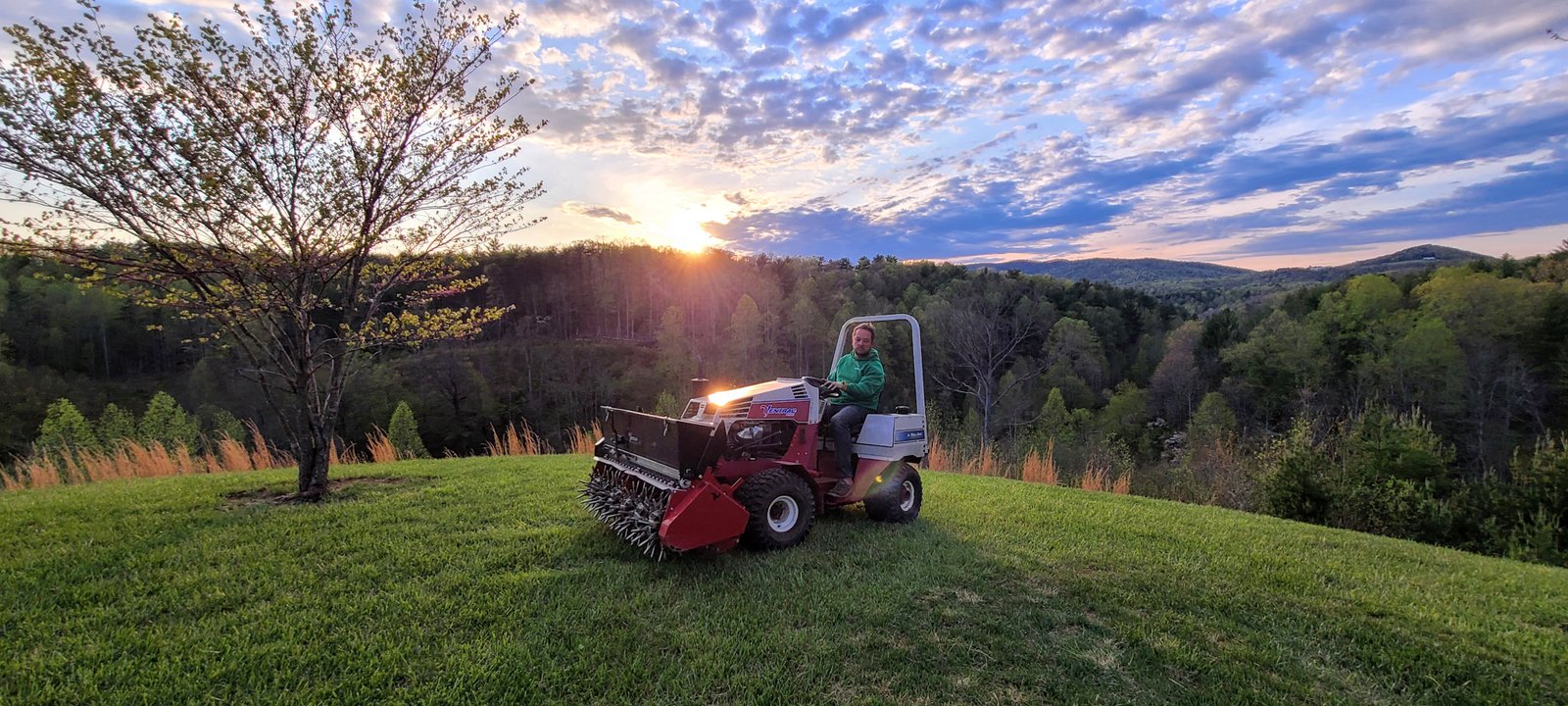
Aeration & Overseeding
Open up the soil. Thicken the turf. Transform your lawn.
If your lawn looks thin, feels hard underfoot, or struggles to stay green despite regular watering and fertilizing, compacted soil is likely the culprit. Core aeration combined with overseeding is the single most impactful treatment you can do for a tall fescue lawn in the Roanoke Valley — and fall is the perfect time to do it.
What Is Core Aeration?
Core aeration uses a machine to pull small plugs of soil (called cores) out of your lawn, typically 2–3 inches deep and spaced every few inches across the entire turf area. This process:
- Relieves soil compaction caused by foot traffic, mowing equipment, and clay-heavy soils common in the Roanoke area
- Allows air, water, and nutrients to penetrate deep into the root zone
- Creates ideal seedbed conditions for overseeding
- Encourages deeper root growth, making the lawn more drought-tolerant
- Reduces thatch buildup that blocks water and fertilizer from reaching the soil
The small cores left on the surface break down naturally within 2–3 weeks, returning beneficial organic matter to the soil.
Overseeding — Thickening Your Turf
After aeration, we overseed the lawn with premium tall fescue seed varieties selected for performance in Virginia's climate. The aeration holes create perfect seed-to-soil contact, dramatically improving germination rates compared to broadcasting seed on an un-aerated lawn.
Overseeding fills in thin areas, repairs summer damage, and gradually crowds out weeds by giving desirable grass a competitive advantage. A thick, dense turf is your lawn's best defense against both weeds and disease.
Why Fall Is the Right Time in Roanoke
For tall fescue lawns — the dominant grass type throughout the Roanoke Valley — fall is the ideal window for aeration and overseeding. Specifically, late August through mid-October is optimal because:
- Soil temperatures are still warm enough for rapid germination
- Air temperatures are cooling down, reducing heat stress on new seedlings
- Fall rains help keep new seed moist without requiring constant irrigation
- New grass has the entire fall and winter to establish roots before summer heat arrives
- Pre-emergent weed control from spring has broken down, so it won't block germination
After Aeration & Overseeding
We walk you through the post-treatment care steps: keeping the seedbed moist for the first 2–3 weeks, avoiding heavy foot traffic while seed germinates, and timing your first mow of the new growth. We're available to answer questions throughout the germination period — typically 7–21 days for tall fescue.
Serving the Roanoke Valley
We provide aeration and overseeding services throughout Roanoke, Salem, Vinton, Daleville, Botetourt County, Smith Mountain Lake, and surrounding areas. Fall scheduling fills up quickly — we recommend booking in August to secure your preferred date.
Call (540) 798-4479 or email prettylawn@greenscapesva.com to schedule your fall aeration and overseeding appointment.
Get a free estimate
Ready to Get Started?
Serving Roanoke, Salem, Vinton, Daleville, and the entire Roanoke Valley.
Common Questions About Aeration & Overseeding
When should I aerate and overseed my lawn in Roanoke?
Go by soil temperature rather than the calendar. Tall fescue germinates reliably once soil temperature falls below about 70°F, with the sweet spot in the 60s. In the Roanoke Valley that usually means late August through early October. Seed needs roughly six weeks of growing time before the first frost, which typically arrives in the second half of October here.
How much does aeration and overseeding cost?
We quote on the actual turf area we treat, not the size of the lot — a half-acre property with beds, driveway, and tree cover has far less grass than a half acre of open lawn, and it would not be fair to charge as though it did. Quality seed is included. We measure the property and give you a written price before any work starts.
Do I need to do both aeration and overseeding, or just one?
They work considerably better together. Aeration without seed relieves compaction but leaves the same thin stand of grass. Seed without aeration mostly sits on the surface and washes away, because tall fescue needs direct seed-to-soil contact to germinate. The aeration holes are what create that contact, which is why we perform both in the same visit.
Can I aerate and overseed in the spring instead?
Aeration alone is fine in spring. Overseeding is not. Spring seedlings have only a few weeks of mild weather before Roanoke summer heat arrives, and they reach July with a shallow root system. Spring seeding also conflicts with crabgrass pre-emergent, since anything that stops crabgrass seed from germinating stops grass seed too.
How long until the new grass comes up?
Tall fescue typically germinates in 7 to 21 days when soil temperature and moisture are right. The seedbed needs to stay consistently moist through that period — light, frequent watering rather than heavy soaking. Hold off on heavy foot traffic until after the first mow of the new growth.
What are the soil plugs left on the lawn afterward?
Those are the cores the aerator pulled out, and they should be left alone. They break down naturally within two to three weeks, returning organic matter and soil microbes to the surface. Raking them up removes part of the benefit of the job.
Does my lawn need to be watered before you aerate?
Yes, and it matters more on Roanoke clay than most people expect. Aeration needs damp soil to pull clean, deep cores. Clay that has gone through a dry stretch sets up hard, and the tines skip across the surface pulling short crumbly plugs that accomplish very little. Water the lawn well the day before, or we schedule you a day or two after decent rain.
More on Aeration & Overseeding
- Dethatching Your Lawn: When and How in Roanoke, VA5 min read
- Soil Temperature, Not the Calendar, Tells You When to Aerate and Overseed6 min read
- The Real Benefits of Aeration and Overseeding — and Why Roanoke Lawns Need Both, Not One6 min read
- Fall Overseeding: How to Get a Thicker, Fuller Lawn in Roanoke, VA5 min read
- Why This Summer's Drought Means Your Roanoke Lawn Needs Aeration and Overseeding This Fall5 min read
- Best Grass Types for Roanoke VA Lawns — What Actually Grows Here8 min read
- 5 Signs Your Roanoke Lawn Needs Aeration This Fall4 min read
- Best Time to Aerate Your Lawn in Roanoke, VA4 min read